
Early Repolarization Syndrome (ERS) is a genetically determined channelopathy characterized by a distinct electrocardiographic phenomenon: the elevation of both the J-point and the ST-segment. While this electrocardiographic pattern is common, it is accompanied, in rare instances, by malignant ventricular arrhythmias or sudden cardiac death (SCD). The syndrome was first described in 2008 by the French electrophysiologist Michel Haïssaguerre. Haïssaguerre demonstrated that a high percentage of patients presenting with idiopathic ventricular fibrillation (IVF)—a severe, otherwise unexplained arrhythmia necessitating an implantable cardioverter-defibrillator (ICD)—exhibited this specific electrocardiographic anomaly.
Although this electrocardiographic abnormality is relatively prevalent in the general population, the clinical syndrome of early repolarization (i.e., the ECG pattern manifesting alongside life-threatening arrhythmias) is exceedingly rare. Furthermore, a similar ECG variant, which possesses distinct morphological features that clinicians must differentiate, can be observed in young individuals and competitive athletes. This benign presentation is typically referred to as the "benign early repolarization" variant (Figure 1)
Contemporary Data & Risk Stratification
In the years following the initial characterization of the syndrome, the field of cardiology has advanced significantly. Clinicians now recognize that the potentially malignant variant typically exhibits a horizontal or descending ST-segment morphology following the J-point elevation, localizing primarily within the inferior leads (II, III, and aVF). Conversely, the classic benign phenotype is characterized by an ascending or concave ST-segment profile.
Crucially, for asymptomatic individuals who present solely with this electrocardiographic finding in the absence of clinical symptoms or a family history of sudden cardiac death, no therapeutic intervention or restriction from competitive sports is indicated. For the small subset of patients diagnosed with true Early Repolarization Syndrome, the primary line of defense remains the implantation of a cardioverter-defibrillator (ICD). Additionally, targeted antiarrhythmic pharmacotherapy, specifically quinidine, has proven highly effective in suppressing arrhythmic events.
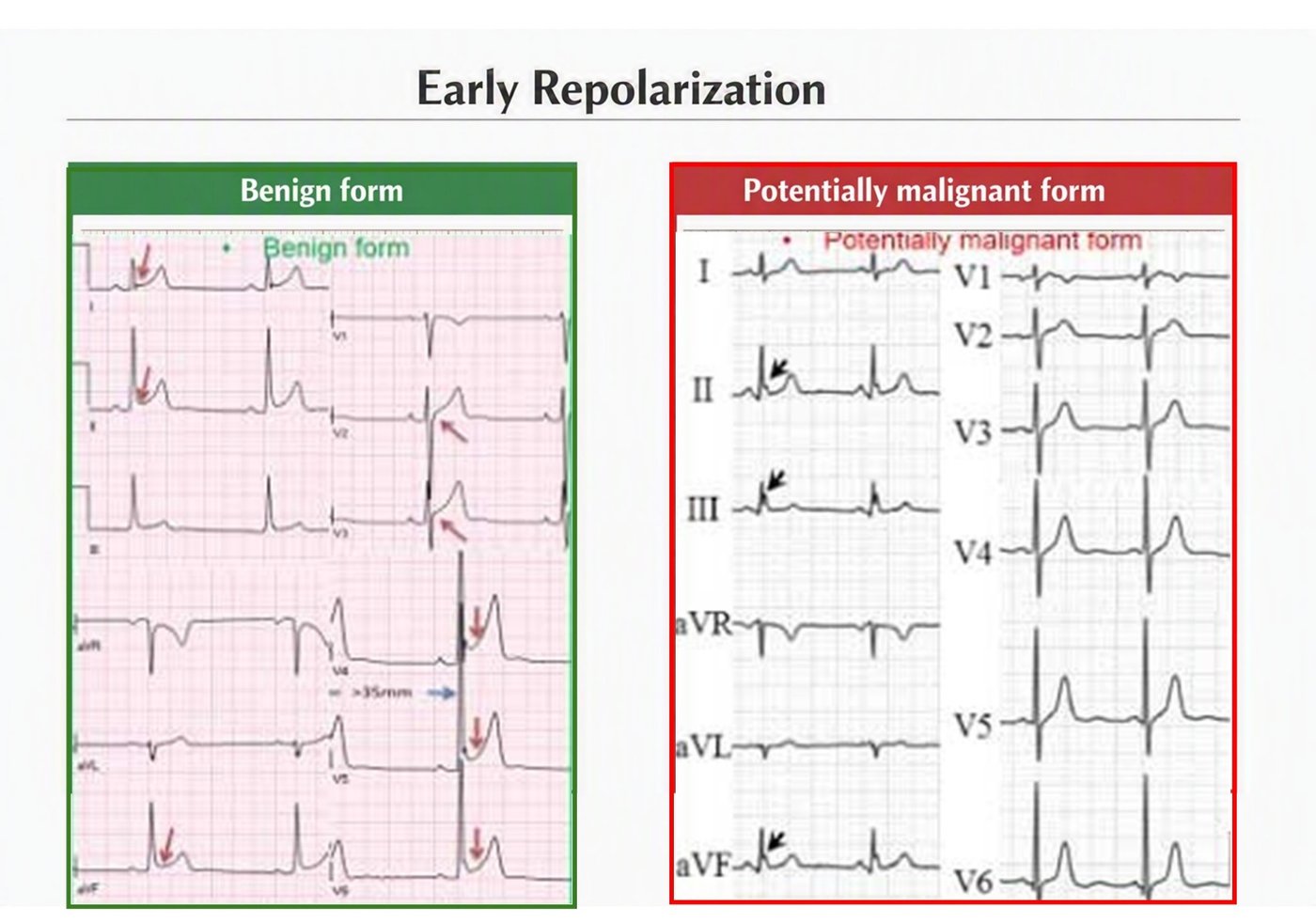
Figure 1. Benign and potentially malignant forms of early repolarization as presenting on the electrocardiogram.