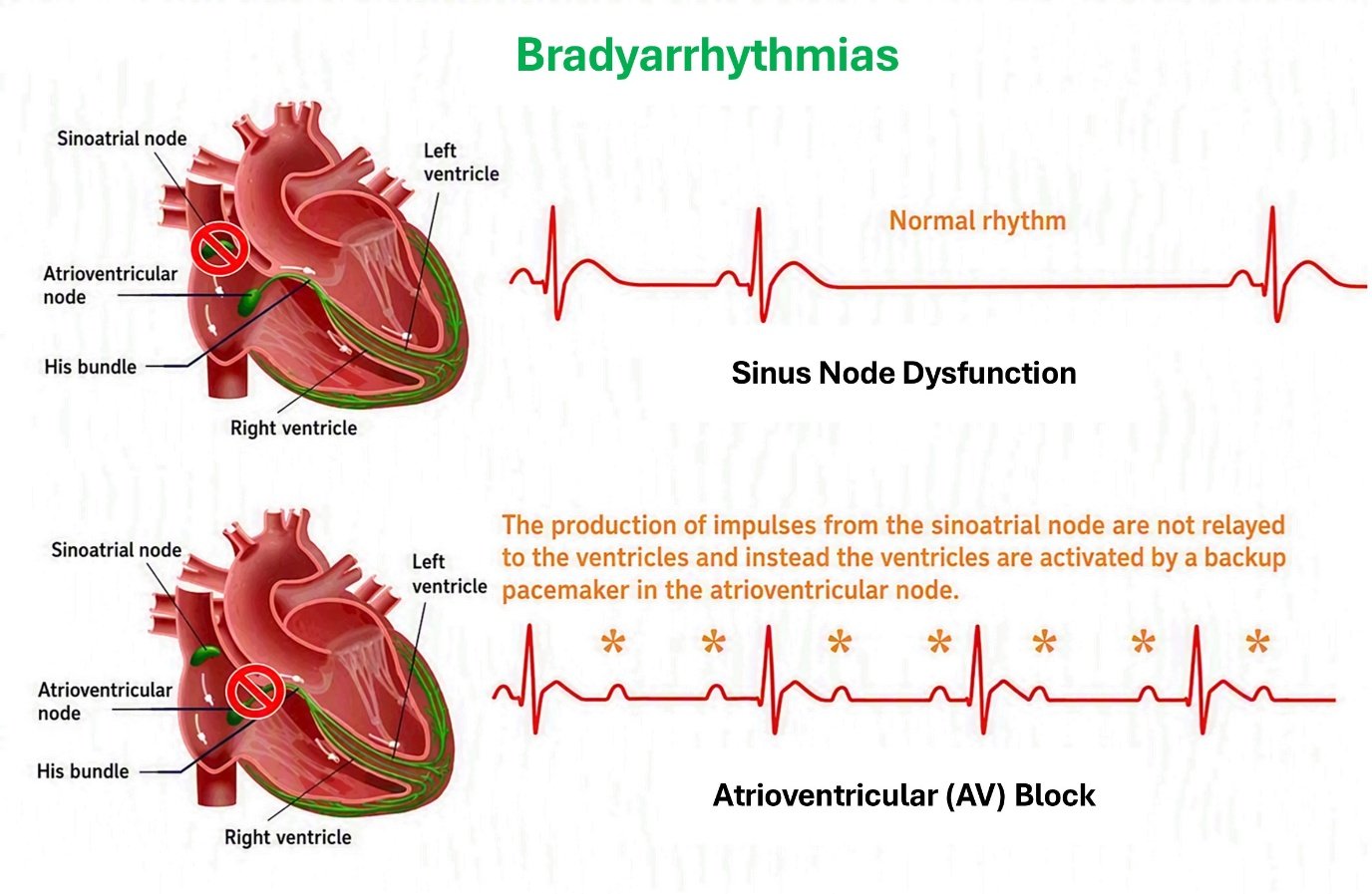
Bradyarrhythmias are clinical conditions characterized by an abnormally low heart rate. It is important to note, however, that sinus bradycardia can often be entirely physiological, as observed in well-conditioned athletes or during sleep. Pathological cases arise from defects either in impulse generation within the sinus node or in impulse conduction through the cardiac conduction system. Consequently, bradyarrhythmias are classified into the following types:
Sinus Node Dysfunction (or Sick Sinus Syndrome): This condition is defined as dysfunction of the sinoatrial node; notably, when accompanied by clinical symptoms such as weakness, dizziness, or syncope, it is referred to as Sick Sinus Syndrome (SSS). In these instances, the heart’s natural pacemaker—the sinus node—fails to generate electrical impulses at an appropriate frequency, typically due to cellular degeneration associated with advancing age. As a result, the heart may operate at a slow resting rate (e.g., 40 bpm) and exhibit chronotropic incompetence, failing to adequately increase the heart rate during exertion. Furthermore, spontaneous sinus pauses may occur, during which impulse generation ceases for several seconds; these pauses are sufficient to induce dizziness or overt syncope. Additionally, when the sinus node loses its physiological dominance, electrical chaos can ensue within the atria, frequently precipitating atrial fibrillation (tachy-brady syndrome). If sinus node dysfunction causes pronounced symptoms, it must be managed with the implantation of a permanent pacemaker. It is worth noting that sinus node suppression is frequently secondary to pharmacological agents, including beta-blockers, calcium channel blockers, or other antiarrhythmic drugs. In some cases, topical ophthalmic drops used for glaucoma may also exert a suppressive effect on the sinus node. Under these circumstances, the offending medications should be discontinued unless medically indispensable, in which case permanent pacemaker implantation becomes mandatory.
Atrioventricular (AV) Block: Once the cardiac impulse reaches the atrioventricular node, it may encounter conduction delays or interruptions along its pathway. This impairment is termed an atrioventricular block. AV block is classified into three degrees: a) first-degree AV block, characterized simply by a prolonged delay in impulse transmission from the atria to the ventricles; b) second-degree AV block, where some, but not all, sinus impulses fail to conduct to the ventricles; and c) third-degree (or complete) AV block, in which no atrial impulses reach the ventricles. In complete heart block, ventricular pacing is assumed by an ectopic ventricular focus operating at an critically low intrinsic rate (e.g., 30 bpm). AV block is typically caused by idiopathic degeneration of the conduction system and occurs most frequently in the elderly. As with sinus node suppression, cases of AV block require careful evaluation for potential pharmacological triggers that may induce or exacerbate the condition. If no such extrinsic factors are present and the AV block compromises stable cardiac function, it must be definitively treated with permanent pacemaker implantation.