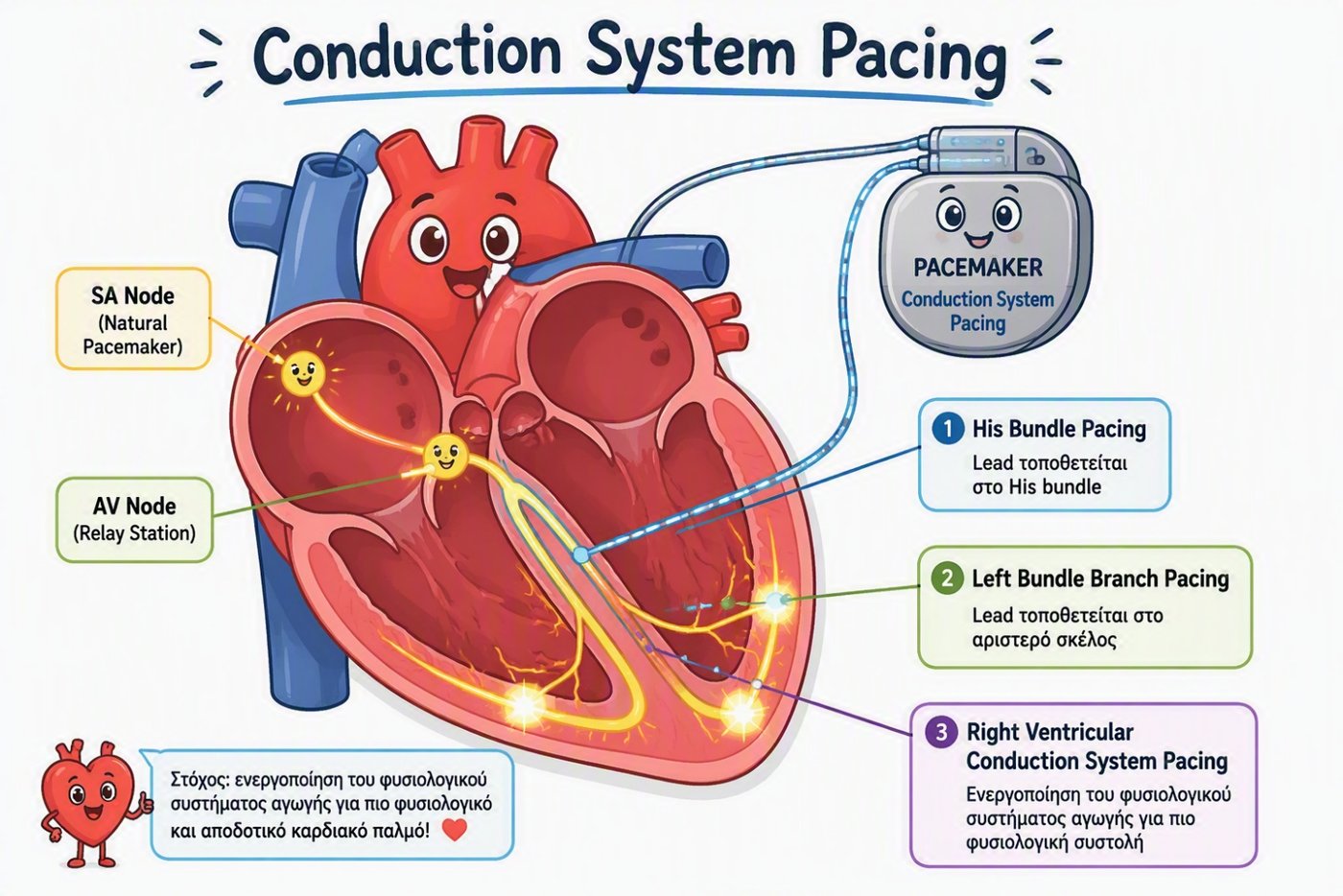
Pacing technology is evolving rapidly, changing the way we treat heart rhythm disorders. The newest and most promising development is called Left Bundle Branch Area Pacing (LBBAP). This is a form of "natural pacing" that is a game-changer for thousands of patients worldwide.
What is Left Bundle Branch Area Pacing (LBBAP)?
Our heart has its own internal "electrical network" (the conduction system) that sends signals to keep it beating smoothly and in perfect sync.
- The traditional method: In classic pacemakers, the wire is placed on the surface of the heart’s right ventricle. Sometimes, this causes the heart to beat slightly out of sync. Over time, this extra effort can tire the heart muscle in about 15-20% of patients.
- The new method (LBBAP): Instead of staying on the surface, the wire is placed deeper inside the wall that separates the two sides of the heart (the interventricular septum). This allows it to "plug" directly into the heart’s natural electrical network (the left bundle branch).
The result? The heart is stimulated naturally, and both sides squeeze in perfect harmony, just as if there were no pacemaker at all!
Why is this new technique better?
The LBBAP method offers important benefits, making it the top choice for many doctors globally:
- Stronger stability: The wire is placed in a thick, muscular part of the heart, which provides excellent support and keeps the wire firmly in place.
- Excellent electrical performance: It requires very little battery power to trigger a heartbeat and is highly sensitive to the heart’s own natural signals, solving technical issues seen in older methods.
- Heart protection: By keeping the heart’s natural rhythm in sync, it lowers the risk of developing pacemaker-induced heart weakness (cardiomyopathy).
An important note: While this method has clear benefits, it is not a one-size-fits-all solution, nor is it necessary for every patient. In many cases, traditional pacing remains a much quicker, simpler, and time-tested option that is completely safe – especially for patients who only need the pacemaker occasionally. This new technique makes the most sense for patients whose hearts need constant pacing support. Ultimately, your treating physician is the only one who can carefully weigh the pros and cons for your specific needs.
What do the latest scientific findings show?
Recent large medical studies and official guidelines from the European Society of Cardiology (ESC) confirm the value of this method:
- Better results in heart failure: Compared to older synchronization methods, LBBAP coordinates heartbeats much better. It also dramatically reduces the need for repeat corrective surgeries (just 2% compared to 15% with older methods).
- First line of defense: Official guidelines now recommend this method as the preferred option for patients with a weak heart muscle who need frequent pacing, in order to protect their heart from wearing out in the future.
- Newly approved technologies: The method is officially approved by international organizations, such as the US FDA, which has cleared advanced, specialized wires designed specifically for this procedure.
- What are the changes for patients who also need a defibrillator? Some patients face a risk of dangerous, rapid heart rhythms and need a defibrillator (ICD) alongside a pacemaker. Until recently, this was done using traditional biventricular pacing (CRT – Cardiac Resynchronization Therapy). However, if that method is technically difficult or impossible to perform, the new LBBAP technique is an ideal alternative. Thanks to new, specially designed ultra-thin leads (like the OmniaSecure™), doctors can now deliver life-saving defibrillation and natural pacing together with total safety.
Conclusion
Natural pacing (LBBAP) is no longer an experimental fallback plan; it is the new standard of care. If you or a loved one needs a pacemaker or treatment for heart failure, speak with your cardiologist to find out which specific technique is the safest fit for your situation.