DECEMBER 2025
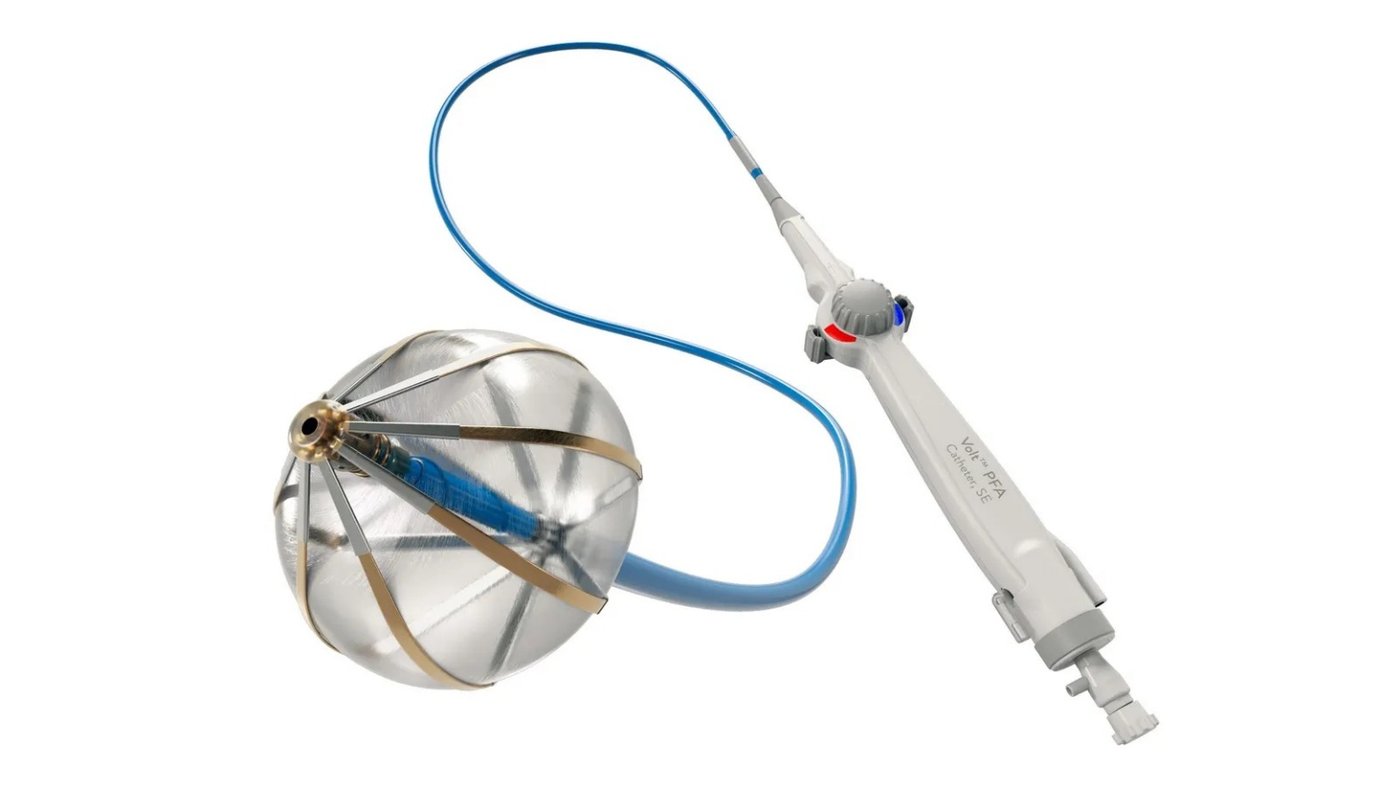
The Heart Rhythm Center consolidates its leading position in the field of interventional electrophysiology by performing the first-in-Greece catheter ablation procedures for atrial fibrillation using the state-of-the-art Volt™ Pulsed Field Ablation (PFA) system.
The integration of this cutting-edge technology represents a major milestone in domestic clinical practice. Pulsed Field Ablation (PFA) is shifting the paradigm in cardiac arrhythmia management. In contrast to traditional modalities that depend on thermal extremes (radiofrequency heating or cryoablation), the Volt system delivers targeted pulsed electric fields. This approach ensures definitive tissue ablation with absolute precision, while sparing adjacent non-cardiac structures.
Clinical Advantages of the Volt™ PFA Technology:
- Superior Safety Profile via Tissue Selectivity: The pulsed electrical energy selectively targets cardiomyocytes, effectively eliminating the risk of collateral injury to adjacent critical anatomical structures.
- Seamless Integration with the EnSite™ X Mapping System: The Volt catheter is fully integrated with the advanced EnSite™ X 3D mapping platform. This enables the interventional electrophysiologist to visualize catheter positioning and electrical fields in real time, ensuring highly accurate energy delivery.
- Intelligent Contact Indications: The system provides explicit real-time metrics regarding optimal catheter-to-tissue contact, ensuring predictable and effective energy transfer.
- Innovative Balloon-in-Basket Catheter Design: The specialized architecture of the catheter guarantees stable tissue contact even within highly complex anatomical variations. This configuration facilitates the formation of transmural, contiguous lesions to prevent arrhythmia recurrence and enables efficient posterior wall isolation in cases of persistent atrial fibrillation (PerAF).
- Enhanced Procedural Efficiency and Reduced Operative Time: Pulmonary vein isolation (PVI) is achieved rapidly, often requiring less than 15 minutes, thereby significantly reducing total intraoperative time.
- Excellent Patient Tolerance Under Minimal Sedation: Controlled energy delivery minimizes patient reaction during pulse application. The procedure is exceptionally well-tolerated, allowing for successful execution under light or deep sedation (monitored anesthesia care) without the mandatory requirement of general anesthesia, ultimately accelerating post-procedural recovery.
Key Contributors
The successful implementation of these inaugural procedures in Greece was driven by the exemplary collaboration of a premier clinical and scientific team.
The comprehensive laboratory and medical support team, whose contribution was vital to the precise execution of the procedures, includes: Dimitrios Gerontitis, Dimitrios Katsaras, Apostolos Katsivas, Panagiotis Charalambopoulos, Vassiliki Tsonona, Dimitra Samara, and Evangelia Christoforatou.
Scientific direction and procedural coordination were led by Panagiotis Ioannidis, Director of the Heart Rhythm Center.
Furthermore, technical and clinical support was seamlessly provided by the specialized team from Abbott, represented by: Anastasios Zagoraios, Niccolò Redaelli, Theodora Kappou, Dionysis Mitsinigos, and Dimosthenis Bakalopoulos.
Crucial to this scientific advancement and the ongoing evolution of the Electrophysiology Department is the steadfast administrative support of the IASO Executive Leadership Team, specifically Ms. Maria Papamarkou, Mr. Emmanuil Doulgerakis, Mr. Spyros Spyropoulos, and Mr. Georgios Stamatiou.
LinkedIn: