
What is it?
Long QT syndrome is a genetically determined disorder characterized by prolonged ventricular repolarization of cardiac cells and an increased risk of severe, life-threatening cardiac arrhythmias. Repolarization is the physiological process by which cardiac cells recover from initial electrical stimulation (depolarization) in order to generate a subsequent heartbeat. The severe arrhythmias occurring within the context of this syndrome include polymorphic ventricular tachycardia (also referred to as Torsade de pointes) and ventricular fibrillation (VF). These are potentially malignant arrhythmias that can rapidly lead to sudden cardiac death within minutes if immediate medical intervention is not initiated.
Long QT syndrome is classified into congenital and acquired forms. Congenital Long QT syndrome, which is the primary focus of this text, is an inherited disorder present at birth, whereas the acquired form develops during an individual’s lifetime and is precipitated by secondary conditions such as underlying cardiac disease, specific pharmacological agents, or serum electrolyte imbalances.
Although approximately 15 different types of congenital Long QT syndrome had been described in the past, modern molecular genetics has re-evaluated these data. Today, it is established that the vast majority of clinical cases involve the first three types: Long QT 1, 2, and 3. In fact, only three specific genes—namely KCNQ1, KCNH2, and SCN5A, corresponding to types 1, 2, and 3—possess definitive and conclusive scientific validation as causative factors for the classical syndrome. The remaining types reported in earlier literature are exceedingly rare or are currently classified by experts as benign genetic variants rather than distinct disease phenotypes.
The various types differ with respect to the specific dysfunctional ionic channel involved, as well as their clinical manifestation and prognosis. For example, in type 1, arrhythmias are predominantly triggered by strenuous physical exertion, particularly swimming; in type 2, episodes are precipitated by loud, sudden auditory stimuli (such as an alarm clock); whereas in type 3, arrhythmic events characteristically occur during sleep or rest.
Symptoms
Patients with Long QT syndrome are frequently asymptomatic, and the diagnosis is often established incidentally via an electrocardiogram (ECG). When symptoms do manifest, they typically arise from severe tachyarrhythmias and can cause transient dizziness or brief syncopal episodes lasting only a few seconds. Less frequently, when these arrhythmias persist for longer durations (exceeding 20–30 seconds), they can cause prolonged loss of consciousness with more profound clinical presentation, or even sudden cardiac death. These manifestations occur because the heart, during an arrhythmic episode, cannot function effectively to sustain adequate cardiac output and deliver oxygenated blood to vital organs, most notably the brain. In certain instances, these episodes are triggered by specific conditions such as strenuous exercise (e.g., swimming), sudden emotional shock, surprise, or terror. Occasionally, they are precipitated by a low heart rate during sleep, though they may also occur at any time without an identifiable precipitating event. Furthermore, the administration of certain concomitant medications (including specific antibiotics, antifungals, antihistamines, anesthetic agents, and certain cardiovascular drugs) can exacerbate QT prolongation and induce acute arrhythmic events.
Diagnosis
The diagnosis of the syndrome is primarily established via a standard electrocardiogram, which allows for the precise measurement of the QT interval. In some instances, the abnormality may not be apparent on a single baseline electrocardiogram, necessitating 24-hour ambulatory ECG monitoring (Holter monitoring) to confirm the diagnosis. Once an individual is diagnosed with Long QT syndrome, clinical screening of family members is imperative to identify other affected individuals, given the hereditary nature of the condition. However, it is important to note that even if genetic testing identifies a pathogenic mutation in a relative, that individual may remain completely asymptomatic and exhibit no clinical markers of the disease. This phenomenon occurs because, beyond the presence of the primary pathological gene, various modifier genes and environmental factors dictate whether, and to what extent, the genetic trait will manifest clinically.
Treatment
The primary therapeutic objective in congenital Long QT syndrome is the suppression and prevention of severe, life-threatening arrhythmic episodes.
Pharmacological Therapy
- Beta-blockers: Examples of these agents include nadolol, propranolol, and others. They constitute the cornerstone and most critical therapeutic modality for Long QT syndrome, as they drastically reduce arrhythmic events in the majority of cases. It is noteworthy that nadolol remains the international "gold standard" for the clinical management of the disease; however, in recent years, it has frequently been subject to supply chain shortages and availability issues in both the Greek and global pharmaceutical markets. In contrast to these non-selective beta-blockers, other common cardiovascular drugs within the same class (such as metoprolol) have proven significantly less effective in providing adequate protection for patients with Long QT syndrome.
- Mexiletine: This is a sodium channel-blocking agent that may be adjunctively administered specifically to patients with Long QT 3 syndrome.
Implantable Cardioverter-Defibrillator (ICD)
Pacemaker-defibrillators are miniature electronic devices implanted subcutaneously in the infraclavicular region. One or two transvenous leads connected to the device are inserted via the subclavian vein and positioned within the cardiac chambers. ICDs do not prevent the onset of arrhythmic episodes; instead, they terminate them immediately upon occurrence via antitachycardia pacing or electrical shocks before they become fatal. ICD implantation is strictly reserved for high-risk patients who experience severe arrhythmic events that cannot be adequately suppressed with optimal beta-blocker therapy.
Left Cardiac Sympathetic Denervation (LCSD)
Left cardiac sympathetic denervation is a surgical procedure aimed at excising specific intrathoracic ganglia responsible for the sympathetic innervation of the heart. This targeted surgical intervention is reserved for complex, refractory cases that demonstrate inadequate response to pharmacological management, particularly optimal beta-blocker titration.
Lifestyle Modifications
In addition to pharmacological or invasive interventions, patients diagnosed with Long QT syndrome are required to adhere to general lifestyle guidelines:
- Physical Activity and Exercise: The clinical approach regarding physical exercise is now based on a shared decision-making process between the physician and the patient. Rigid, blanket prohibitions on all forms of physical activity are currently avoided. Patients who remain completely asymptomatic for a minimum of 3 months and are maintained on an optimal, compliant dose of beta-blockers may, following specialized clinical evaluation and clearance by their treating cardiologist, participate even in competitive sports (with the strict exception of swimming for patients with the LQT1 phenotype). In all cases, any physical activity must be conducted with a fully verified emergency rescue protocol and immediate, direct access to an automated external defibrillator (AED).
- Avoidance of Proarrhythmic Medications: Strict avoidance of any pharmacological agents known to prolong the QT interval is mandatory. The comprehensive and regularly updated list of these contraindicated drugs can be accessed online via the dedicated registry at www.crediblemeds.org.
- Hydration and Electrolyte Homeostasis: Maintaining meticulous hydration and prompt electrolyte replacement is critical during episodes of pyrexia, diarrhea, or acute gastroenteritis.
- Psychological Wellbeing: Avoidance of severe emotional distress, sudden shock, or startle responses is highly recommended. Implementing psychological support and stress management strategies is exceptionally important for maintaining an optimal quality of life.
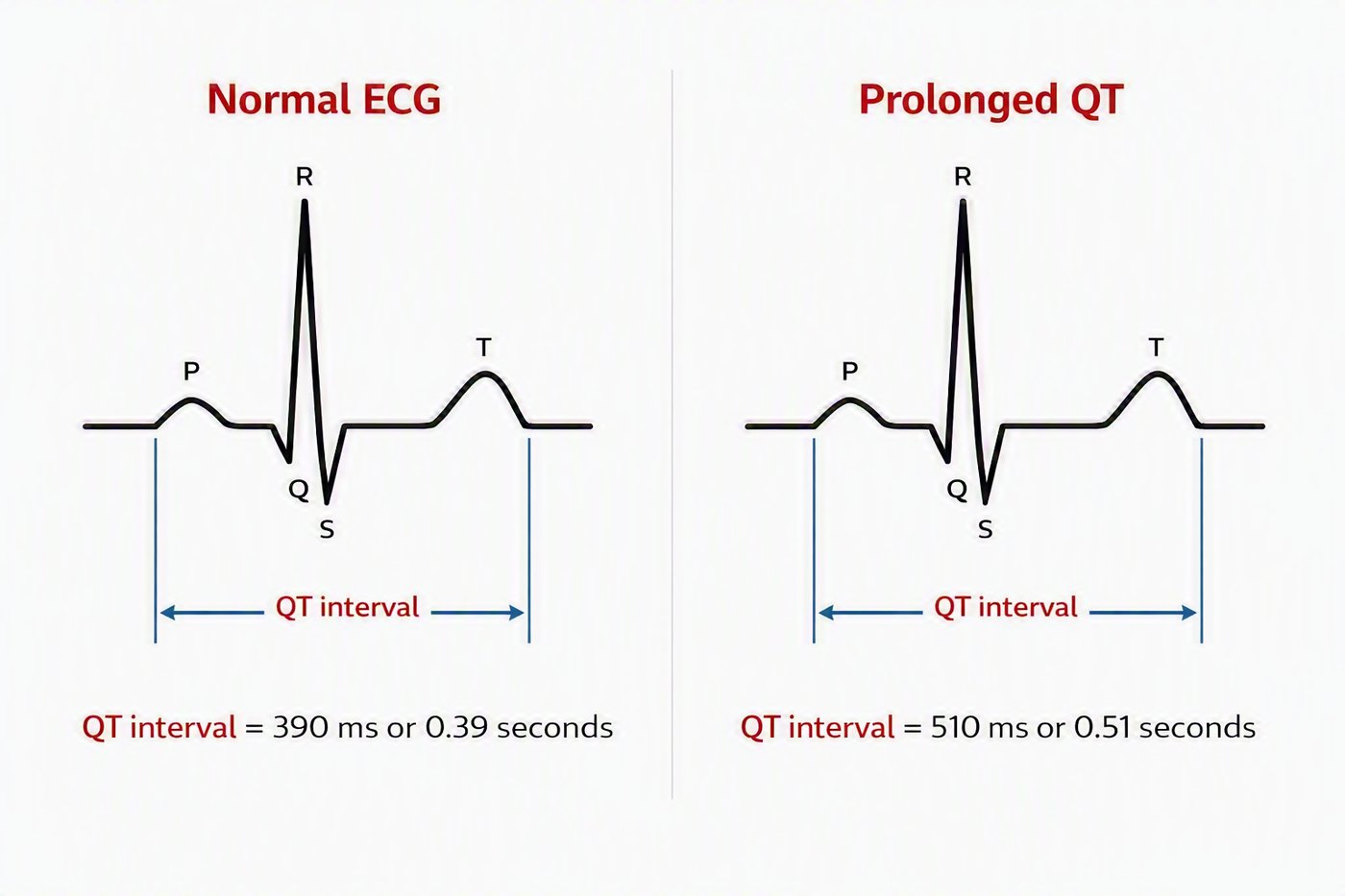
Figure 1. Methodology for measuring the QT interval on an electrocardiogram (ECG). Comparative view demonstrating a normal versus a pathological QT interval.