
The primary actions of Digoxin are:
- Increase in ventricular contractility (positive inotropy).
- Prolongation of atrioventricular (AV) nodal conduction delay, which constitutes its definitive antiarrhythmic mechanism of action.
The mechanism of action of digoxin is illustrated in the Figure.
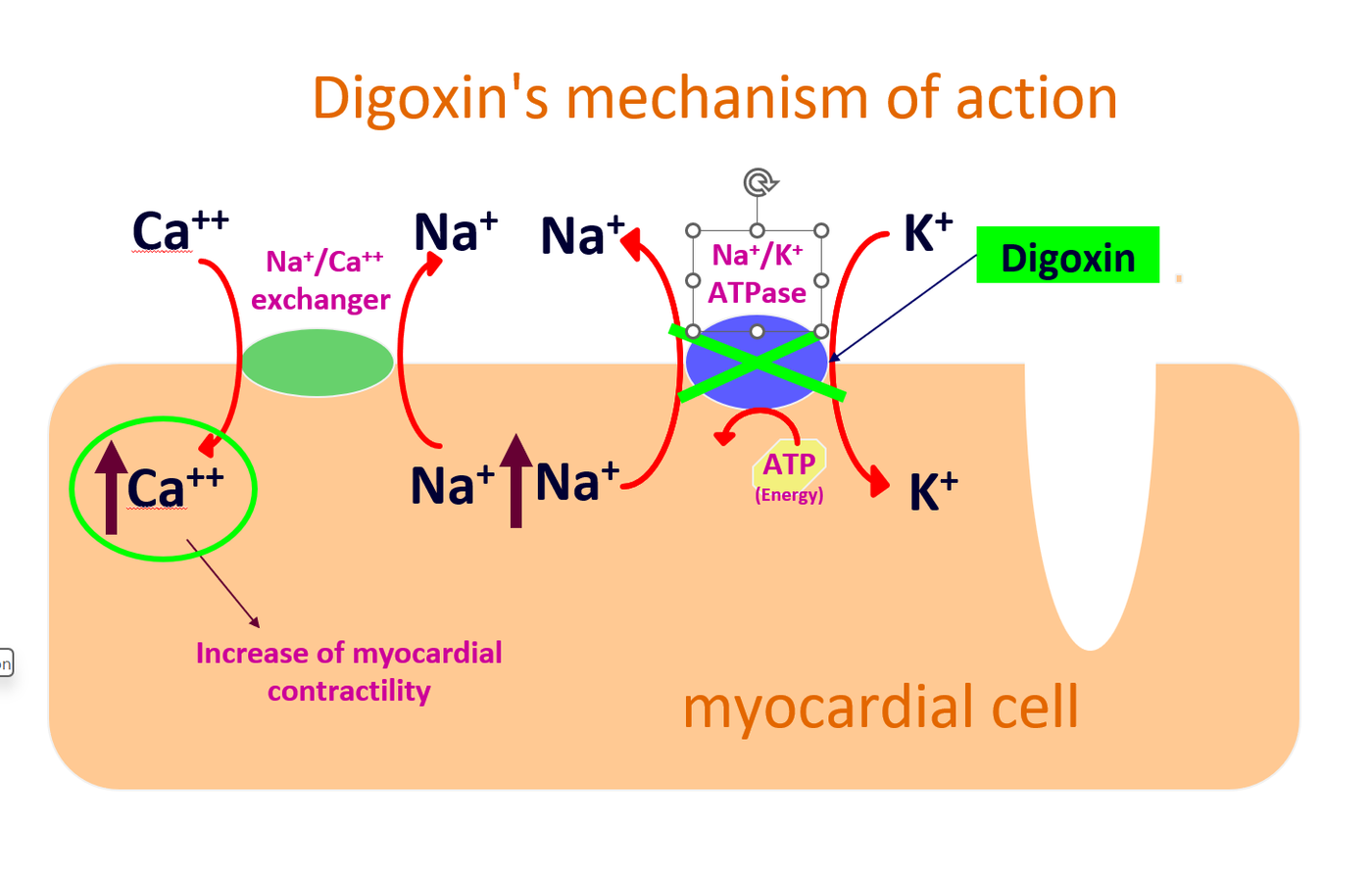
The inhibition of the Na⁺/K⁺-ATPase pump by Digoxin leads to an increase in intracellular sodium (Na⁺). This initiates a cascade that impairs the Na⁺/Ca⁺⁺ exchanger, subsequently elevating intracellular calcium (Ca⁺⁺) levels within the myocardial cell. Consequently, myocardial contractility is enhanced.
Concurrently, Digoxin exerts a vagomimetic effect by enhancing parasympathetic tone, which manifests clinically as sinus bradycardia and slowed conduction of the electrical impulse through the AV node.
Indications
- Ventricular rate control via the slowing of AV nodal conduction in patients presenting with atrial fibrillation complicated by a rapid ventricular response. For this clinical indication, Digoxin is typically co-administered with other rate-limiting agents. However, Digoxin is preferentially selected as monotherapy or primary adjunct therapy in the specific setting of concomitant heart failure, where alternative agents—such as non-dihydropyridine calcium channel blockers—are contraindicated due to their negative inotropic effects, which could exacerbate heart failure.
Adverse Effects
- Atrioventricular (AV) block localizing at the level of the AV node, and sinus bradycardia.
- At toxic serum concentrations, Digoxin can induce neurological disturbances, including confusion and paresthesias.
- Gastrointestinal manifestations include nausea, vomiting, and diarrhea.
- Visual disturbances may present as blurred vision and xanthopsia (yellow-tinted vision or halos around objects).
- Furthermore, toxic doses of Digoxin have the potential to precipitate virtually any type of cardiac arrhythmia.