
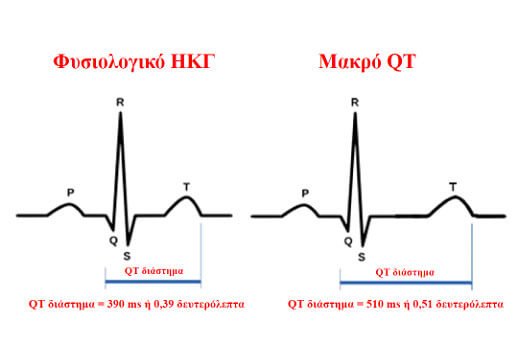
Quinidine is a class Ia antiarrhythmic drug derived from the bark of the cinchona tree, which is native to South America. It is a stereoisomer of quinine, the well-known antimalarial medication. Quinidine acts as a sodium channel blocker, thereby prolonging the action potential duration and the QT interval on the electrocardiogram.
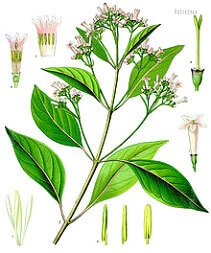
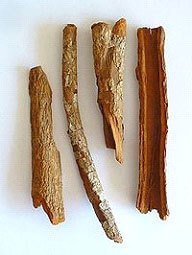
Quinine is extracted from the bark of Cinchona officinalis (commonly known as Jesuit’s bark or Peruvian bark), a tree native to the tropical rainforests of the Andes and cultivated in India, Malaysia, Indonesia, and Sri Lanka.
Indications
Quinidine is an orally administered medication historically utilized for supraventricular arrhythmias (e.g., for the cardioversion of atrial fibrillation) as well as for ventricular arrhythmias, such as premature ventricular contractions. However, its propensity to induce the highly dangerous Torsades de Pointes tachycardia serves as a major deterrent against its widespread clinical use. Furthermore, observations of increased mortality in patients receiving quinidine have largely led to the abandonment of its routine clinical application. Recently, quinidine has proven efficacious in the management of recurrent malignant ventricular arrhythmias in patients with Brugada syndrome and short QT syndrome.
Adverse Effects
- Gastrointestinal disturbances, including nausea, vomiting, diarrhea, abdominal pain, and anorexia.
- Central nervous system disorders, including tinnitus, hearing impairment, visual disturbances, confusion, and psychosis. This symptom complex is clinically recognized as cinchonism.
- Allergic reactions, including rash, fever, thrombocytopenia, and hemolytic anemia.
- Conduction disturbances characterized by an increased QRS duration.
- Induction of polymorphic ventricular tachycardia (Torsades de Pointes) secondary to QT interval prolongation.
- In certain instances, due to its vagolytic effect and peripheral vasodilation—which triggers reflex sympathetic stimulation—it may accelerate conduction through the atrioventricular node, potentially exacerbating tachycardia due to excessive conduction of atrial impulses to the ventricles.
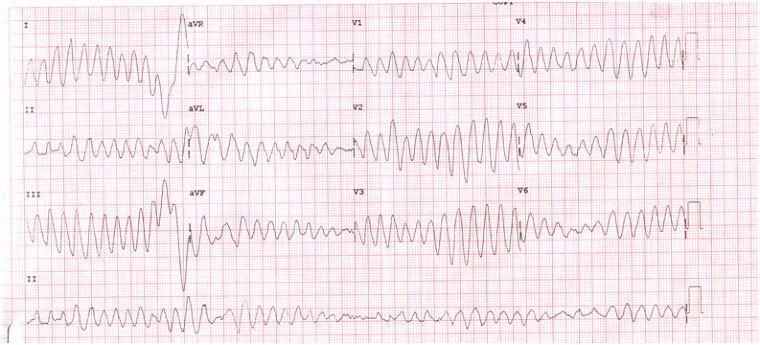 The highly dangerous Torsades de Pointes tachycardia